
Call: 08071931255
 Send Inquiry
 Send Inquiry
Fine Aggragates Sieves
Price 695.0 INR/ Number
Fine Aggragates Sieves Specification
- Response Time
- Immediate (depends on mechanical operation)
- Application
- Particle size analysis, fineness testing of fine aggregates (sand)
- Resolution
- Depends on sieve mesh size (finest up to 0.01 mm)
- Humidity
- Operational within ambient lab humidity conditions
- Power Supply
- Not required for hand sieves
- Port Size
- Available in 8 inch (200 mm) & 12 inch (300 mm)
- Hardness
- Frame: Brass/Aluminium; Mesh: Stainless Steel
- Accuracy
- Complies with IS: 460 part 1, ASTM E11 standards
- Specimen Size
- Up to 1 kg per sieve stack
- Mounting Type
- Portable, stackable
- Max Height
- Varies with number of sieves in stack
- Measuring Range
- 0.15 mm to 4.75 mm (sieve aperture sizes)
- Number of Specimens
- One sample per test (as per IS: 2386 standards)
- Features
- Rugged construction, Stainless steel mesh, Brass/Aluminium frames, Stackable design
- Test Range
- Fineness modulus and sieve analysis of aggregates (0.15 mm 4.75 mm)
- Display Type
- Not applicable (physical sieving and gradation observed visually)
- Temperature
- Operational within ambient lab temperature conditions
- Automation Grade
- Manual
- Equipment Type
- Laboratory Sieve Set (Fine Aggregates Sieves)
- Usage
- For laboratory analysis of granular fine materials
- Capacity
- Multiple sieves can be stacked for bulk analysis
- Machine Weight
- Approx. 2-5 kg (depending on sieve size & stack quantity)
- Test Speed
- Manual operation (not motorized)
- Test Width
- Standard laboratory size - 20 cm to 30 cm in diameter
- Test Stroke
- Not applicable stationary sieving
- Control Mode
- Manual
- Fitting Type
- With lid and receiver (optional accessories)
- Conforming Standards
- IS: 460, ASTM E11, BS 410
- Sieve Diameters Available
- 200 mm (8 inch), 300 mm (12 inch)
- End Construction
- Deep/half depth as per application
- Cleaning Method
- Easy wash and brush off
- Mesh Sizes
- IS: 0.15, 0.3, 0.6, 1.18, 2.36, 4.75 mm or as per customer requirement
- Packaging
- Individual or set in corrugated boxes for safe transport
- Type of Sample
- Fine aggregates, sand, soil, cement
- Sieve Frame Material
- Brass or aluminium with stainless steel mesh
About Fine Aggragates Sieves
Product details
|
Shape |
Round |
|
Material |
Brass |
|
Weight |
500-1000 gram |
|
Pattern |
Plain |
Sieve analysis or gradation test is one of the most basic procedure in Civil engineering to determine the particle size distribution of a given sample (mostly sand).
Specification
- Design based on the IS 460
- The Diameter Of Seive-20cm
- Available in the range of 4.75 mm,2.8mm,2.36mm,1.18mm,600micron,425micron,300micron,150micron,90 micron,75micron,45micron and lid and pan
Robust Sieve Construction
These laboratory sieves are built with brass or aluminium frames and durable stainless steel mesh, making them resistant to wear and ensuring long service life. Their rigid construction supports secure stacking for multi-sieve analyses, while deep or half-depth design options accommodate different testing requirements. Each sieve adheres to stringent IS: 460, ASTM E11, and BS 410 standards, ensuring accuracy and consistency in results.
Wide Range of Applications
Fine Aggregates Sieves cater to a variety of materials including sand, soil, cement, and other fine aggregates. Their primary use is for particle size analysis, determining fineness modulus, and gradation assessment according to IS: 2386 standards. These sieves are ideal for quality control in construction, geotechnical labs, and research purposes, supporting specimen capacities of up to 1 kg per sieve stack.
Easy Operation & Maintenance
With a fully manual operation-requiring no power supply-these sieves offer immediate visual grading results. Cleaning is straightforward: users can wash and brush the mesh surfaces with ease. The sieves are lightweight, portable, and come individually boxed or as a set for safe transportation. Optional lids and receivers help contain samples during testing, ensuring user convenience and result integrity.
FAQ's of Fine Aggragates Sieves:
Q: How are Fine Aggregates Sieves used for particle size analysis in a laboratory?
A: To perform particle size analysis, you stack the required sieves (with selected mesh sizes), place a representative fine aggregate sample up to 1 kg on the top sieve, and manually agitate the stack. Particles are separated by mesh size, and gradation is determined by weighing material retained on each sieve, following IS: 2386 or similar standards.Q: What mesh sizes and sieve diameters are available for these Fine Aggregates Sieves?
A: Mesh sizes range from 0.15 mm, 0.3 mm, 0.6 mm, 1.18 mm, 2.36 mm, up to 4.75 mm, with custom options possible. Sieve diameters are available in 200 mm (8 inch) and 300 mm (12 inch) to suit different testing requirements and sample volumes.Q: When should I choose brass vs. aluminium sieve frames?
A: Brass frames are typically preferred for their higher durability and resistance to corrosion, ideal for frequent laboratory use. Aluminium frames offer a lighter, more cost-effective option, suitable for general particle size analysis where corrosion is less of a concern.Q: Where should these sieves be stored and used for optimal performance?
A: Fine Aggregates Sieves should be used and stored in ambient laboratory conditions-within standard room temperature and humidity levels. Keeping sieves clean, dry, and stacking them carefully protects the mesh and frame, preserving accuracy and lifespan.Q: What is the process for cleaning and maintaining the sieves?
A: After each use, gently brush off residual particles and wash the mesh with water if needed. Avoid abrasive or reactive cleaning agents. Ensure sieves are completely dry before storage to prevent corrosion, particularly with brass frames and stainless steel mesh.Q: How does the stackable design benefit laboratory analysis?
A: Stackable sieves allow simultaneous separation of a sample into multiple size fractions in one operation, increasing efficiency, reducing handling time, and enabling standardized, repeatable results across different tests.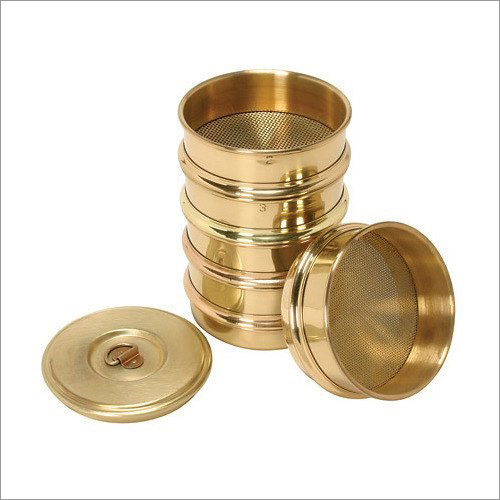
Tell us about your requirement

Price:
Quantity
Select Unit
- 50
- 100
- 200
- 250
- 500
- 1000+
Additional detail
Mobile number
Email


Contact Details
OM ENTERPRISES
GST : 27ANTPP2231L1ZI
- Om House, S.No. 151/14/12, Magarpatta Road, Near Noble Hospital, Opp. Nine Options,Pune - 411028, Maharashtra, India
- Phone :08071931255

 Send Inquiry
Developed and Managed by Infocom Network Private Limited.
